As part of the joint effort of the Macedonian .NET and ITPro User Groups, this year we took part in VS Code Dev Days. This is a global initiative to help developers learn and up-skill in AI-assisted development using Visual Studio Code. After all, in September, there are over 60 events this year, all around the world. The events are organized by Microsoft, MVPs, Student Ambassadors, and GitHub communities.
The ‘usual suspects’ for this event were Vlatko Ivanovski (MVP-DevOps, Moderator), Miodrag Cekikj (MVP-AI Platform), Miroslav Janeski(MVP-Microsoft Azure, Developer Technologies) and Dimitar Grozdanov (MVP-Microsoft 365, ITPro User Group). The event was held at the hacker space Base42 and it was packed.
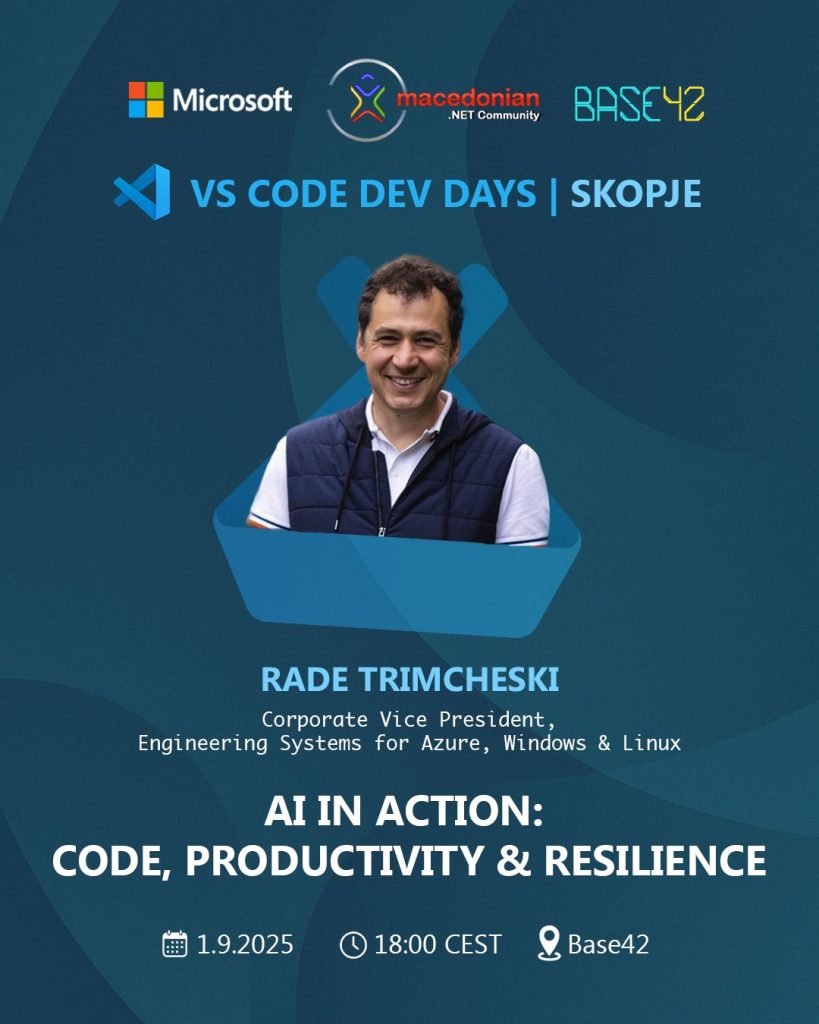
One of the reasons being, that our guest speaker was Rade Trimceski, Corporate Vice President, Engineering Systems – Azure, Windows & Linux at Microsoft. He went full demo mode in the session – showing how Microsoft uses AI-assisted tools in their daily operations, mono/micro repos, some internal tailor-made systems and took questions from the attendees.
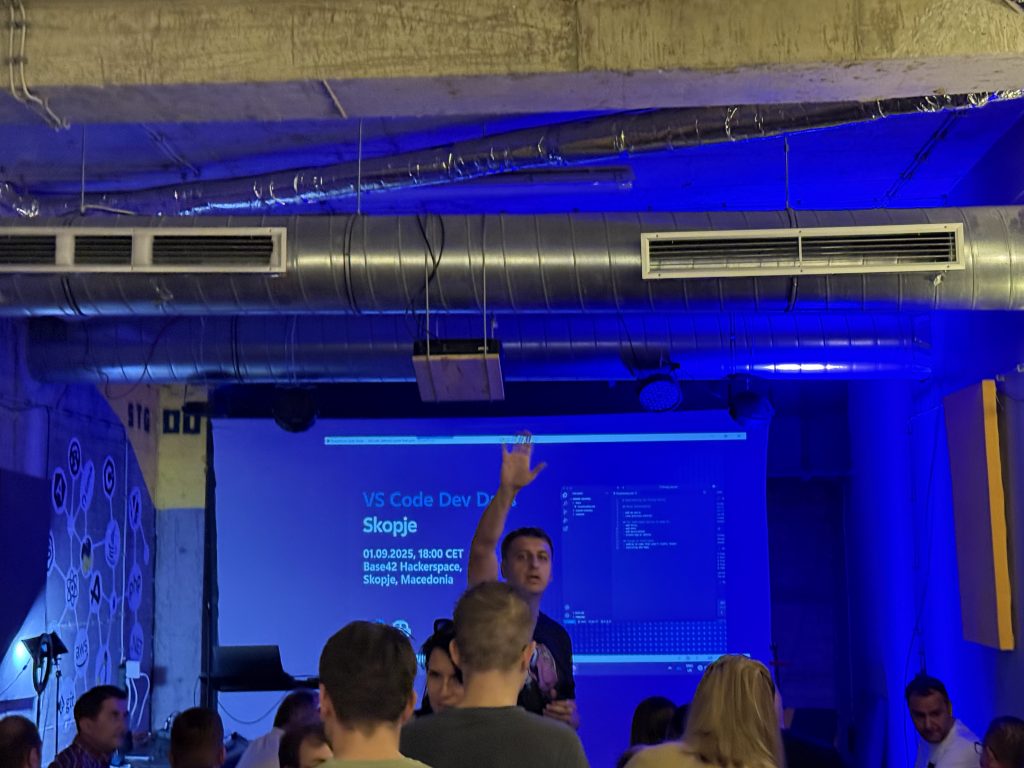
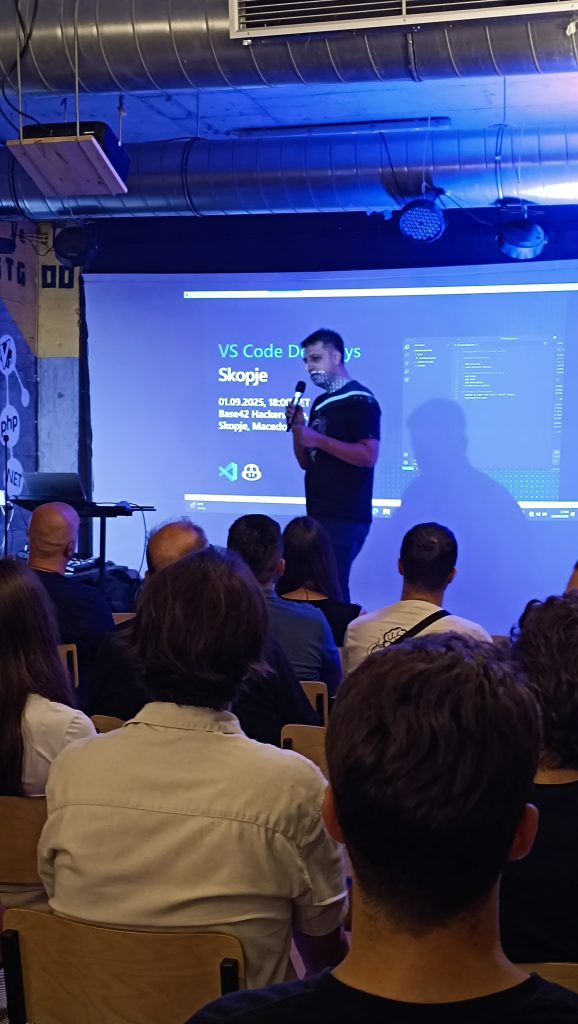
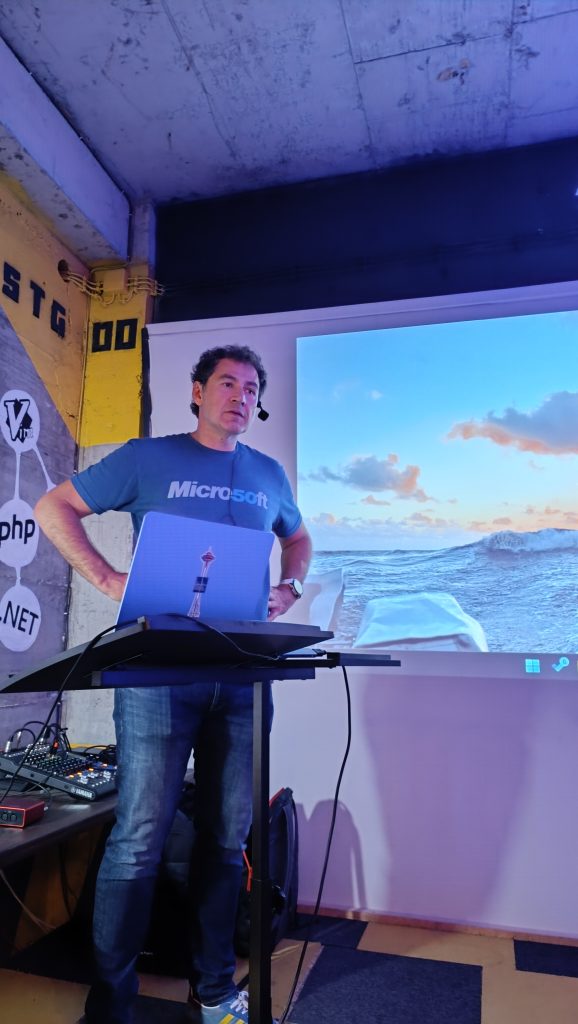
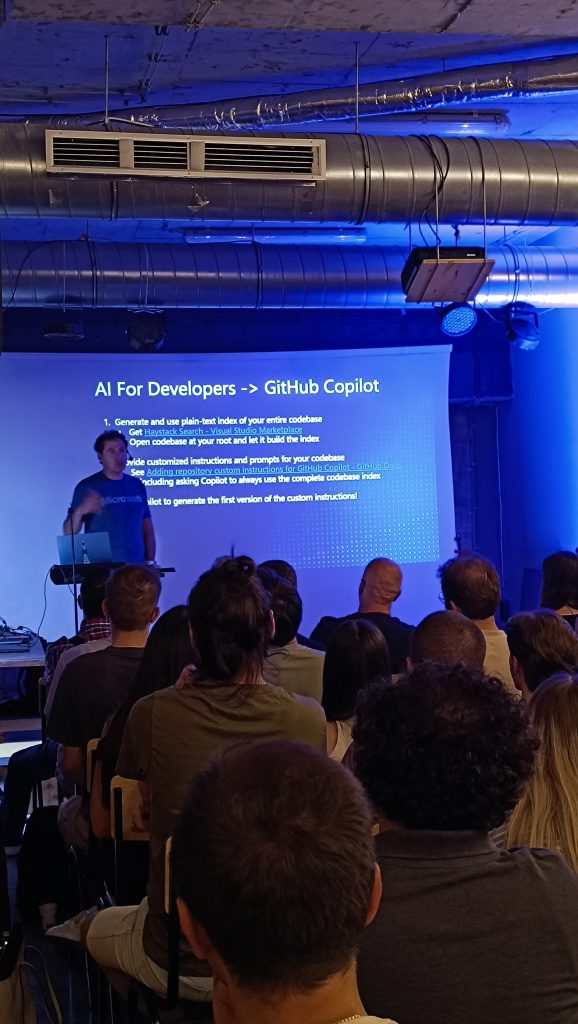
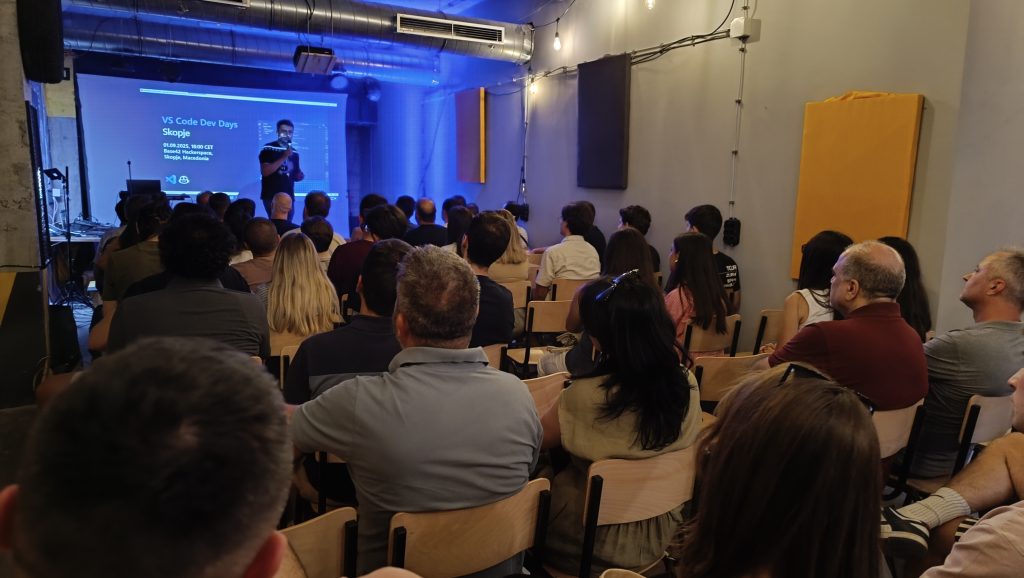
Note: Due to the nature of the systems showed, no recording/photos are available from the session content. Some reference materials are shared, which are publicly available.
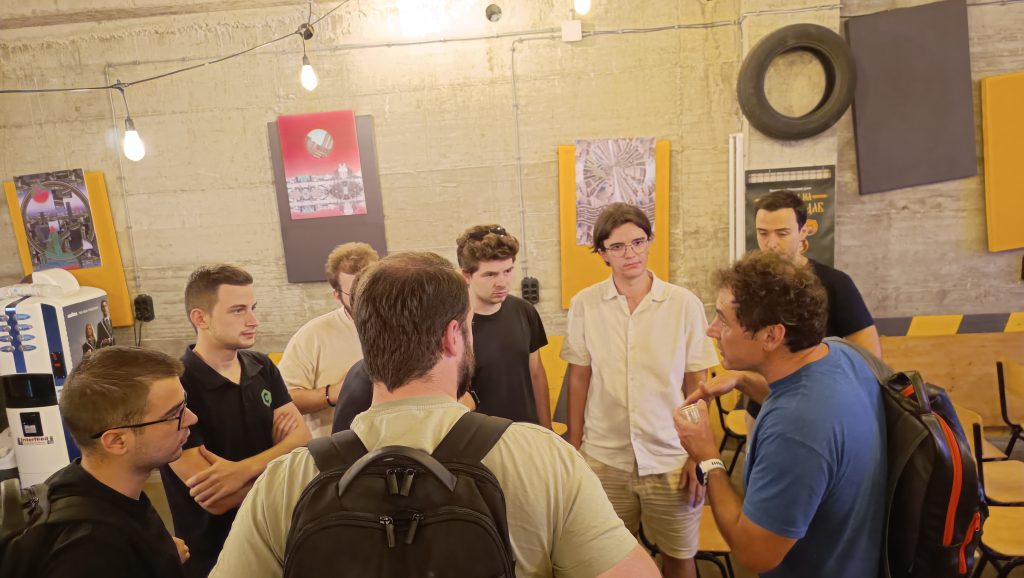
After the session we sat down with Rade, and asked him the ‘tough’ questions. 🙂
The Interview
Q: You’ve had a remarkable journey in software engineering. From your early days in the NT kernel team to leading engineering systems across Azure, Windows, and Linux. How has your perspective on developer tooling and productivity evolved over the years?
Developer tools that improve productivity have been advancing through the years at a pretty good pace in the 20 years I’ve been working on large-scale software projects. But the dawn of generative AI has dramatically accelerated evolution in developer tools and their effects on productivity.
So I would say that of the last 20 years, the first 18 we saw linear improvements to developer tools for productivity of developers. In the last 2 years we have seen exponential improvements. And we are just at the beginning of the AI revolution.
Q: Looking back at your early career, what’s one lesson or mindset that has stayed with you and continues to shape how you lead and innovate today?
It’s the mindset of continuous improvement. Both as a person, as a team and as a company. If you invest every week in becoming better at something, after a few weeks you won’t notice a big difference. But if you consistently do it for months and years, the “compounding” effect will make you much better.
This applies to skill improvements (e.g. how good am I at debugging a kernel mode crash), knowledge acquisition (I learn new thing every week), etc.
Q: Your presentation explores customizing GitHub Copilot with Haystack Search. What are some common misconceptions developers face when integrating Copilot into large code-bases, and how can they overcome them?
We are early in the AI journey. For some time we thought that building fine-tuned models for large code-bases is the best way to improve the quality of GitHub Copilot responses in large code-bases, think Windows OS code-base.
What we discussed in the talk is using GitHub’s custom instructions and prompts capabilities to supercharge the relevance of GitHub’s copilot’s answers in large code-bases, like the Windows OS code-base.
In addition to custom instructions, we now know that providing a complete, even plain-text, index of the code-base to Copilot also improves the quality of the responses. I mentioned the Haystack Search VS Code extension as one plugin that offers a full-codebase index. It’s just one example.
Q: You mentioned generating custom instructions for Copilot. How important is it for developers to take ownership of their AI tooling setup? What best practices would you recommend for teams just starting out?
It’s extremely important. AI systems like GitHub Copilot are a tool. And like with every tool you must learn how to use it and adapt it to your needs. Otherwise, you are not getting the best use out of the tool.
At this talk we covered providing custom instructions to GitHub Copilot. Best practices:
- Take the time to provide custom instructions
- Check github/awesome-copilot and other public repositories for instructions you can re-use that are applicable to your codebase
- If you need to create instructions from scratch, first build a full index of your source code with VS Code extensions like Haystack Search. Then leverage Copilot to analyze the source code and generate the first version of the instructions.
- More generally, always pay attention to release notes for tools you are using, e.g. VS Code, Copilot. In the AI space things are evolving very rapidly. Every week there is something new.
- Finally, pay attention to Hacker News, Reddit or other places where engineers discuss innovations in tools. You’ll learn what other people are doing and what is and isn’t working for them.
Q: “AI in Action” is the theme of this year’s Dev Days. From your experience, what are the most tangible productivity gains developers can expect when they fully embrace AI-assisted coding?
I have seen AI help with writing documentation for code, fix categories of bugs that are mundane but very important, and stand up fully functional web-apps. This is to say, AI-assisted coding can help in many ways.
With this said, at the end of the day, the developer is responsible for the code, even when AI assisted in writing or fixing the code.
Q: How do you personally stay curious and inspired in such a fast-evolving industry as AI and software engineering?
I love what I do so it’s not hard for me to be curious and inspired. I read and follow what other folks are doing. I mentioned earlier, reading websites like hacker news, Reddit forums, talking to coworkers and friends are all ways in which I stay curious and inspired.
Q: This is your first time speaking to the local development community in Skopje. What are your impressions, and what message would you like to leave with aspiring developers here?
People had super insightful and thoughtful questions. Software development is one of the few industries where it doesn’t matter where you are, it matters how well you solve problems. To all aspiring developers, I’d say, invest the time to get really good and don’t be afraid to take on very hard problems. It pays off in the long term.
Q: After a long day of solving complex engineering challenges, what’s your favorite way to unwind?
Spending time with my family is at the top. I also love sailing and I’m fortunate that Seattle is one of the premier places to sail, so I do that often.



Be the first to comment